

Ifi iDSD GR2

The successor to the iconic Gryphon redefines portability without sacrificing resolution or power, delivering an experience that rivals desktop setups while maintaining its travel-friendly essence.

A little over a year ago, I had the good fortune of reviewing the iFi xDSD Gryphon—a device that combined a DAC and amplifier in a portable form factor, and which had already earned iconic status among headphone enthusiasts by the time it reached my hands. Back then, I praised its display and menu system, output power, connectivity, and battery life. It was a highly versatile and well-balanced system. Now, the time has come to take another step forward. iFi has updated the Gryphon, presenting us with the evolution of a classic: the iDSD GR2.
There is something fascinating about how portable technology has evolved to deliver sound that no longer feels like a compromise. As I mentioned, the original iFi xDSD Gryphon set a precedent by combining a compact design with impressive sound quality, but the new iDSD GR2 takes this formula to a whole new level. More power, better wireless codecs, longer battery life, and an improved display implementation—essentially, they have upgraded every single aspect.
To make the most of this review, I tested the GR2 in two scenarios where it feels equally at home: as a desktop setup paired with the Sennheiser HD490 Pro (ideal for analytical and focused listening), and on the go with the ZiiGaat x Vivir Digital RUMBA (for a comfortable mobile experience). The GR2 proves that portability doesn't mean sacrificing resolution, dynamics, or power, and that a single device can be versatile enough to cover a wide range of needs. Let's take a closer look.
Build and Design
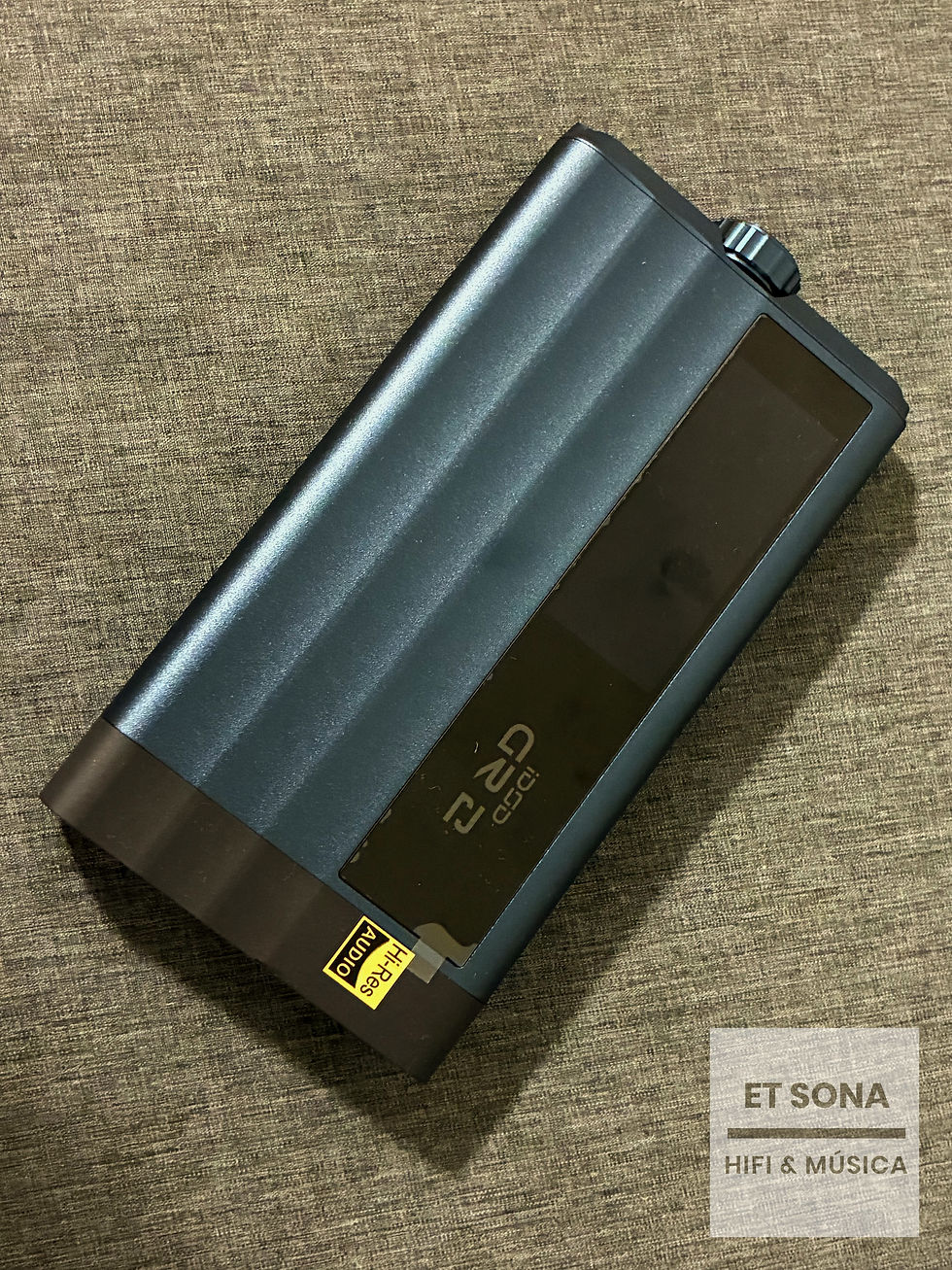
The GR2 retains the sleek silhouette of the Gryphon while adding significant improvements. Its CNC-machined aluminum chassis with a matte finish houses a 2.0-inch capacitive OLED touchscreen that replaces several of the physical buttons from the previous model, offering more intuitive control and making the displayed information much clearer and easier to read.

The chassis is sturdier, with a weight of 268 grams that feels solid without being uncomfortable during extended use. The new Burr-Brown PCM1795 chip functioning as a current-output DAC allows for a completely redesigned analog output stage, while the Class A amplifier featuring OPA1612/OPA1656 op-amps delivers a more natural character and reduces listening fatigue.

Something that definitely deserves attention, as it clearly dominates the device, is the new screen. At a glance, it provides a wealth of information—something the previous model couldn't do due to its physical size constraints. There are those who oppose the "trend" of putting screens on everything. Yes, I get it; I've felt that way too. Is it an age thing? Who knows. In any case, for our purposes here, I completely justify the inclusion of the screen: it makes navigating the device's parameters and menus much easier, while displaying genuinely useful information. The colors look great, the resolution is crisp, and it adds a very eye-catching element to using the unit.
The original Gryphon shaped its design around physical buttons; it was more compact, but at the same time, less flexible in terms of connectivity. The GR2 adds Bluetooth 5.4 with aptX Lossless, while retaining compatibility with high-resolution codecs like LDAC and LHDC. The inclusion of K2HD technology—designed to restore harmonic content lost during digitalization—is a legacy feature that has been kept and improved in this new model. iFi has placed a strong bet on this tech, and after testing it on the Valkyrie, I have to say it yields great results during listening.

On the front, you'll find the 3.5mm and 4.4mm outputs, allowing you to use it with both single-ended (SE) and balanced headphones. As a reminder, the 4.4mm balanced output typically offers a bit more power. The rotary volume knob remains, featuring the LED indicator that changes color to reflect the current power level. There are also physical controls for the available filters, although, to be honest, the presence and ease of use of the touchscreen render the manual buttons largely unnecessary.
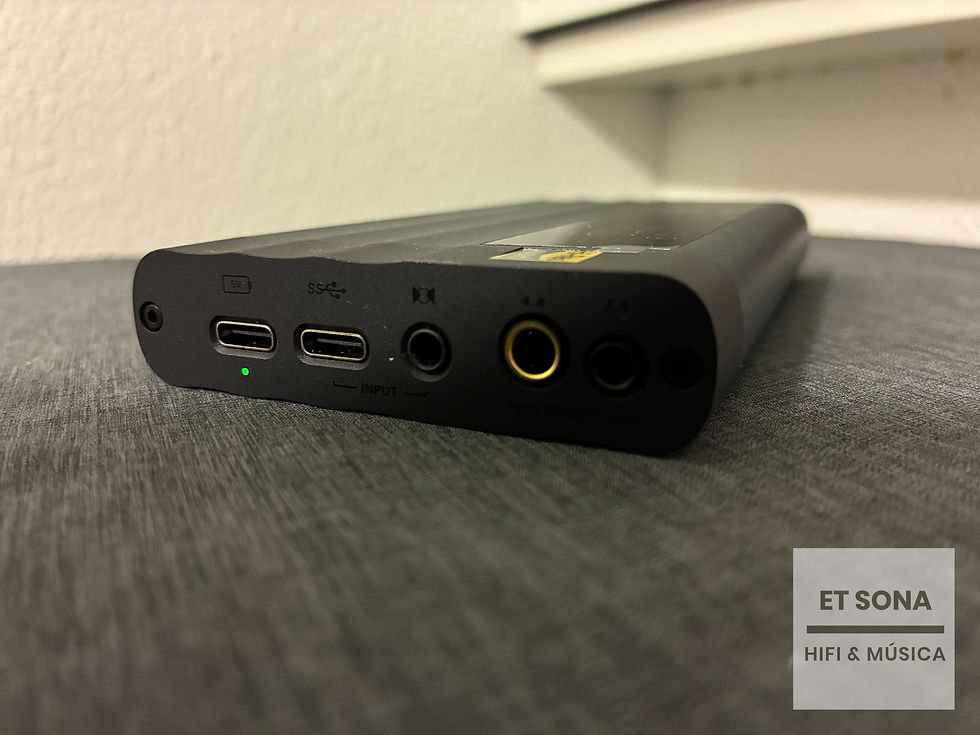
At the back, we find the connectivity options. Two USB-C ports—one dedicated to charging and the other for using the unit as a DAC connected to another device—a setup that is both highly practical and well executed. There is also a mini-Toslink input, which is somewhat less useful for my needs. Finally, two additional inputs—3.5mm and 4.4mm—allow for connecting analog gear rather than strictly digital sources.
Technical Specifications
DAC: Burr-Brown PCM1795, 32-bit, DSD512, PCM 768 kHz
Output Power: 1,513 mW RMS (50% more than the Gryphon)
Connectivity: USB-C, Bluetooth 5.4, S/PDIF optical/coaxial, 4.4mm balanced, 3.5mm SE
Battery: 1,200 mAh, 8–12 hours of battery life, smart hybrid power mode
Dimensions: 135 × 75 × 25 mm, 450 g
How It Sounds
With the Sennheiser HD490 Pro
The HD490 Pro are open-back studio headphones that demand a precise amplifier with solid bass control. The GR2 handles this task with impressive authority for its size. The low end on the HD490 Pro is delivered with definition and control that far surpass what the original Gryphon offered, particularly on tracks with complex sub-bass layering. Each bass note is reproduced with a fast attack and natural decay, without the slight sluggishness I occasionally noticed on the previous model.
Harmen Fraanje’s piano in And Then Comes the Night occupies a wide, three-dimensional space, while Magnus Øyen’s drums never sound strained or lose detail in the cymbals. The soundstage feels more stable and focused than on the Gryphon, courtesy of the extra power output and the GR2’s fully balanced output stage. The K2HD processing restores the warmth of older recordings without adding artificial coloration, preserving the analytical precision that the HD490 Pro demands.
With the ZiiGaat x Vivir Digital RUMBA
The RUMBA are hybrid IEMs featuring a 10mm graphene dynamic driver alongside a balanced armature for mids and highs. With an impedance of 17 Ω and a sensitivity of 111 dB, they are ideal for portable use. The GR2 drives them with a level of power that reveals their true potential: the bass carries a depth and control that do full justice to the driver's design, while the midrange retains its richness and the treble extends smoothly for long, fatigue-free listening sessions.
On Jon Hopkins' Music for Psychedelic Therapy, the synth pads and high-frequency elements are rendered with a level of clarity that rivals desktop setups. The soundstage is vast and coherent, with every element placed precisely within a 360-degree space. The GR2 proves that portability no longer means compromising on resolution or dynamics, delivering an experience that makes the RUMBA sound larger and more detailed than their price tag would suggest.
The inclusion of menu options to manage IEM sensitivity, combined with controls to enhance bass presence (a classic signature feature for the brand), adds a substantial, impactful body to the RUMBA, which respond exceptionally well to the boost.
Conclusions
The GR2 surpasses the Gryphon across every technical metric: higher DAC resolution, greater output power, superior connectivity, and a more modern user interface. However, in my view, the original Gryphon retains a nostalgic charm and compactness that some users may still appreciate. Its aesthetic feels more "retro," and the contrast between the new touchscreen and the older display—with its more analog, "post-modern" feel—has an undeniable, captivating appeal.
Choosing between the two ultimately comes down to primary use: if you demand maximum portability, power, and battery life, the GR2 is the clear winner. The original Gryphon held an almost unshakeable niche, but it is time to yield to the next generation.
The iFi iDSD GR2 represents a significant evolution that redefines expectations for portable DAC/amps. Its mix of high-resolution performance, abundant power, and versatile connectivity makes it an indispensable tool for the modern audiophile. Paired with the Sennheiser HD490 Pro, it delivers a precise, analytical listening experience, while its pairing with the ZiiGaat RUMBA demonstrates its ability to drive demanding IEMs with ease. Compared to the original Gryphon, the GR2 doesn't just improve specs on paper—it refines the user experience and raises the bar for what portable gear can achieve.
Finally, I’ll share an opinion that might spark a bit of controversy, but I stand by it: the iDSD GR2 is essentially a "mini" Valkyrie. Plain and simple. While it doesn't match the ultimate power and capacity of its flagship sibling, if on-the-go listening is your priority, make no mistake: you will get remarkably close to the brand’s flagship performance at a noticeably lower price point. This is a huge positive that speaks volumes about iFi—it shows they don't lock away their best technological breakthroughs behind an artificial paywall, but rather scale performance directly to cost. No tricks, no gimmicks.
The iDSD GR2 has officially earned a spot on my Three Kings wishlist. My Gryphon is still going strong after a little over a year of use, and truthfully, its time hasn't quite run out yet. But when that moment comes, I know exactly what my next upgrade will be.


Comments