

Audio-Technica AT-LPA2

Audio-Technica is a brand that moves forward with steady and sure steps along the path of excellence in the field of high-fidelity analog audio.

It is not a brand that floods the market with continuous launches, firing in all directions. Despite this, it boasts a broad portfolio with all types of options, ensuring that every enthusiast or professional finds the most appropriate turntable. In this case, the AT-LPA2 model clearly targets the most demanding audiophile audience. It is a completely manual turntable with a grand presence that will lead it to be the protagonist of any audio system. Designed for vinyl lovers who value both aesthetics and effective performance, the AT-LPA2 features a 30 mm high-density acrylic chassis and a 20 mm acrylic platter.

This unique, completely transparent construction is not only attractive but also allows for exceptional resonance control, as it minimizes unwanted vibrations to achieve exceptionally clear reproduction. It is also interesting that the power supply and control unit are external. By separating these components from the turntable, the AT-LPA2 isolates sensitive audio parts from potential electrical interference, guaranteeing sound clarity. The test unit comes with the OC9XEN MC cartridge whose performance, as we will see, has surprised us very positively. Although we have tested the turntable with superior cartridges from the same brand, our advice is that, from the start, it is worth taking advantage of the supplied cartridge and considering an upgrade later when it reaches the end of its useful life.

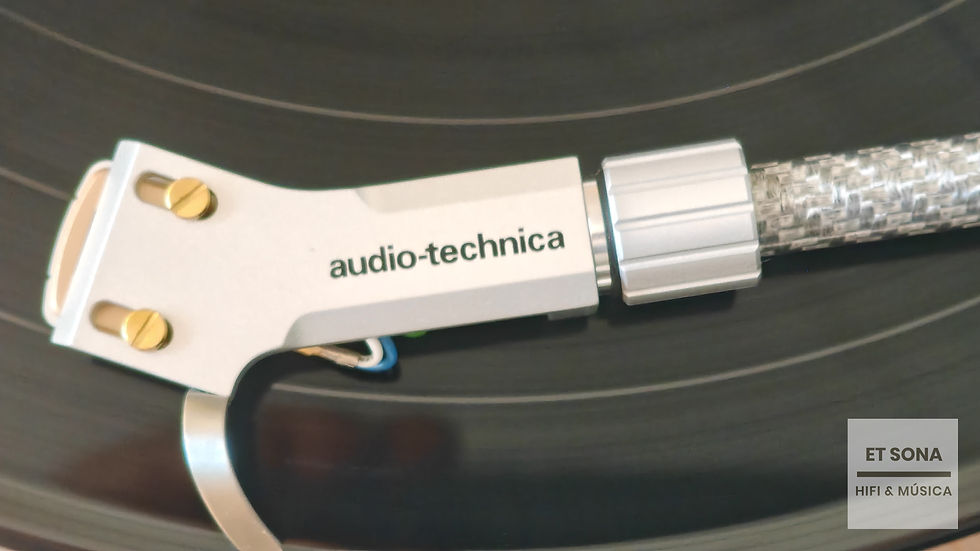
The tonearm also deserves special attention: it is of considerable length and made of carbon fiber. Before moving into the user experience, there is a detail that deserves special mention: there is an optical sensor, located under the headshell, that monitors the platter's rotation to maintain precise speed.

When I analyze turntables, there is a part where I am usually very critical: the initial assembly and calibration. I have had very bad experiences with very high-end decks that were so delicate they were difficult to adjust correctly. With the AT-LPA2, exactly the opposite occurs. The instruction manual guides us step by step, and everything is very easy. The prospective buyer should keep in mind that the headshell is not the standard (straight) AT-LH11H type used by other lower models, but rather ends at an angle. This is necessary given the length of the tonearm. The advantage is that the stylus operates in the optimal position even at the end of the record. In any case, the assembly is completed in a few minutes.

The Japanese brand has taken care of every detail and provides two counterweights to ensure compatibility even with cartridges from other brands. The VTA is also adjustable, and the anti-skating mechanism is highly precise, allowing for fine adjustment with a small counterweight. The feel of all elements when handling them transmits a sense of solidity and quality. Finally, with a micrometric precision scale, we check the stylus pressure. Surprisingly, it is exactly 2 grams, just as we calibrated with the counterweight. That is to say, the system is so reliable that there is no need to employ the trial-and-error method so common with other brands.
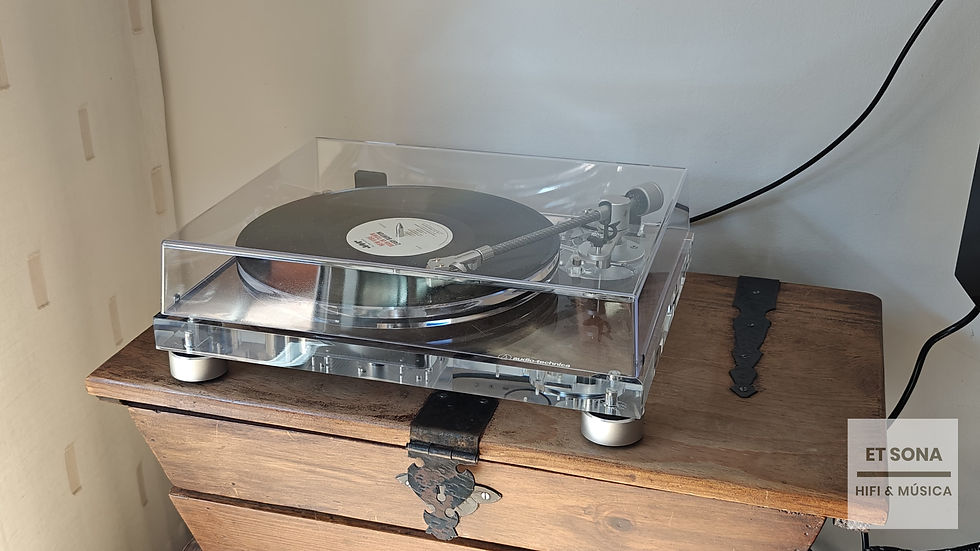
We began the tests with the new Pat Metheny vinyl Side-Eye III+ (2026). This new work marks a before and after in the guitarist's career, as it is the first title on his own record label. The edition is very good and the recording contains all kinds of textures and nuances, as Metheny has accustomed us to. The AT-LPA2 is very refined in its execution and extracts all the information contained in the vinyl with exemplary precision. In the second track, "Don’t Look Down," which is more composed, the double bass acts in the background, building a clear but subtle rhythmic base. The bass is perfectly restored with elegance, allowing one to follow every note. For the cartridge to reach its maximum performance, it is necessary for the turntable to provide a solid and stable base. The heavy methacrylate plinth is ideal for this and surpasses other materials like wood or plastic that are less rigid and heavy. The result is noticeable.
We move on to the Santana single "I Love You Much Too Much" (1981), an original from the era. A single press on the separate module allows us to change the turntable's speed. The second half of the song increases in strength and rhythm. Santana phrases with his electric guitar, filling the listening room. The Audio-Technica platter spins in a hypnotic way and contributes decisively to the listening experience.
In conclusion, I can confirm that we are looking at an eminently audiophile and purist product, but one that adds important values such as aesthetics and ease of use. The AT-LPA2 is a reliable, very complete product that, once analyzed in depth, exceeds initial expectations. The Japanese brand, with good judgment, offers a package with a cartridge included at a quality/price ratio that is very favorable for the buyer. And we are talking about the top of the range from Audio-Technica. Furthermore, it is a turntable that can be very long-lived and evolve with superior cartridges. But, if I had to define it more passionately, I would say it is a captivating, fascinating, and powerfully attractive product.
Audio-Technica AT-LPA2 Audio-Technica AT-LPA2 Audio-Technica AT-LPA2 Audio-Technica AT-LPA2 Audio-Technica AT-LPA2 Audio-Technica AT-LPA2 Audio-Technica AT-LPA2 Audio-Technica AT-LPA2 Audio-Technica AT-LPA2 Audio-Technica AT-LPA2 Audio-Technica AT-LPA2 Audio-Technica AT-LPA2 Audio-Technica AT-LPA2


Comments